

Sono ormai prox all'ordine di uno schermo 16:9, a cornice rigida ma nell'impossibilità di valutarlo direttamente nn so che tipo di telo montare...mi sembra di capire che il benQ7700 (lum 1000) sia ben adattabile a gain compresi tra 1.0 e 1.4. Le opzioni sono un "vision grey" da 1.0, un classico white 1.2 o un white pearl (retro perlato) 1.4 (utilizzo previsto cinema 90% in ambiente tot oscurabile, montato in sospensione). Attendo vostro graditissimo parere specie se avete già avuto modo di confrontare materiali simili; ciao

Installa l'app
Come installare l'app su iOS
Segui il video qui sotto per vedere come installare il nostro sito come web app sulla tua schermata principale.
Nota: Questa funzionalità potrebbe non essere disponibile in alcuni browser.
Stai usando un browser non aggiornato. Potresti non visualizzare correttamente questo o altri siti web.
Dovreste aggiornare o usare un browser alternativo.
Dovreste aggiornare o usare un browser alternativo.
Scelta tipologia telo vs parere??
- Autore discussione vinx
- Data d'inizio

nemo30
Active member
- Messaggi
- 17,241
- Località
- Rende - Cosenza
Io andrei per un 1.2. E' ottimale secondo me. 

cobracalde
Moderatore
- Messaggi
- 9,729
- Località
- Genova
voto anch'io 1.2


Scusate ragazzi 
Ho scritto giusto un post, che penso sia ripetibile pure su questo thread, sul tipo di telo da acquistare. Il motivo della mia "insistenza", sia lì che qui, è il voler stringere le cose per "ridurmi i tempi morti".
In quanto vorrei autocostruirmi lo schermo devo solamente decidere il "materiale" più adatto.
In questo thread avete tutti consigliato un telo a guadagno 1.2 per un DLP (per di più tutte personcine con il panny LCD, il mio prox. vpr). Nella mia ricerca all'interno del forum ho notato cmq come andava per la maggiore il telo Blackout Peroni, in termini di qualità; il guadagno di questo, però, è di 1.5. Forse tutte le persone che lo hanno acquistato avevano CRT??
Cosa faccio: meglio che mi fiondi sul Peroni "normale" 1.2 visto il mio vpr?
Ho scritto giusto un post, che penso sia ripetibile pure su questo thread, sul tipo di telo da acquistare. Il motivo della mia "insistenza", sia lì che qui, è il voler stringere le cose per "ridurmi i tempi morti".
In quanto vorrei autocostruirmi lo schermo devo solamente decidere il "materiale" più adatto.
In questo thread avete tutti consigliato un telo a guadagno 1.2 per un DLP (per di più tutte personcine con il panny LCD, il mio prox. vpr
). Nella mia ricerca all'interno del forum ho notato cmq come andava per la maggiore il telo Blackout Peroni, in termini di qualità; il guadagno di questo, però, è di 1.5. Forse tutte le persone che lo hanno acquistato avevano CRT??Cosa faccio: meglio che mi fiondi sul Peroni "normale" 1.2 visto il mio vpr?
D'accordo, mi avete convinto (  ): prendo il normale 1.2.
Naturalmente se pur fossero esaustive le vostre risposte, ho voluto documentarmi maggiormente. Riporto qui quanto ho trovato d'interessante. Segno anche i passi più importanti.
Articolo: What is screen gain?
): prendo il normale 1.2.Naturalmente se pur fossero esaustive le vostre risposte, ho voluto documentarmi maggiormente. Riporto qui quanto ho trovato d'interessante. Segno anche i passi più importanti.
Articolo: What is screen gain?
Articolo: How to buy a screenGain is a measurement of the reflectivity of any screen or projection surface. The gain number represents a ratio of the light that is reflected from the screen as compared to the light reflected from a standard white (magnesium oxide) board. Therefore, a screen with a gain of 1.0 will reflect the same amount of light as that from a white board. A screen rated at 1.5 gain will reflect 50% more light as that from a white board, whereas a gray screen with an 0.8 rating will reflect 80% of the light from a white board.
First, as just noted there is a trade-off between gain and viewing angle. A 1.0 gain screen diffuses light evenly in all directions. Thus seating can be placed in a wide viewing angle relative to the screen and all seats will afford a similar viewing experience regardless of the angle of view. With a high gain screen the brightness of the image increases to those seated in the center, and diminishes for those seated at the outside. Furthermore once you move off center axis the relative brightness of various portions of the image can shift quite dramatically. Thus a high gain screen can put limitations on the number of optimum viewing seats you can have in your theater.
Second, a high gain screen does not typically reflect red, green, and blue equally. So it can generate color shifts in the image that are noticeable as you move around the screen viewing it from different angles. Once again, the image looks different to each viewer depending on where they are seated.
Third, any screen with a gain higher than 1.0 has some degree of hotspotting. That is, when viewing the screen from a center position, the middle portion of the image will appear brighter than the edges. On screens under 1.3 gain or so this is not very noticeable, but as gain increases beyond 1.3 it can become a real distraction.
An important performance factor for a screen fabric is what is called its "gain." This is a very simple concept. Some screen material will reflect light uniformly in all directions. When it does this, it is said to have "no gain." If a screen has no gain, the picture you see on the screen will look the same no matter what angle of view you have to the screen. So if several people are watching the picture at different angles to the screen, they will all see essentially the same picture at the same brightness level.
Screen materials that have high gain will reflect more light back toward the center of the viewing area, and less light toward people sitting on the sides of the room. When this happens, people sitting in the middle of the audience will see a bright picture, and those sitting toward the sides will see a dimmer picture. You can see this effect yourself; as you move from the center to the side of a field of view, you can notice that the picture gets dimmer.
In the past, high gain screens were important because projector light output was relatively low. So any boost in image brightness was welcome. However, today's projectors are very bright indeed, and if you have a projector with sufficient light output, it is best to go with a no gain, or low gain screen since they give a more uniform picture over a wider angle of viewing.
Ultima modifica:
kokkorollo
New member
- Messaggi
- 301
- Località
- Barletta (BA)
anche io ero intenzionato a prendere il peroni blackout,ma dopo aver letto questi articoli rimango davvero molto perplesso.
forse è davvero prendere il telo bianco anche sul retro della peroni?
infatti questo ha un guadagno di 1.2, mentre il blackut di 1.5......che dovrebbe soffrire di hotspotting....
qualcuno potrebbe rispondere?
al massimo vedo di creare un nuovo post specifico, magari ci entrano person eche ne sanno di + su questo telo.
tra l'altro il telo bianco anche sul retro costa pure meno......
allora......consigli?
forse è davvero prendere il telo bianco anche sul retro della peroni?
infatti questo ha un guadagno di 1.2, mentre il blackut di 1.5......che dovrebbe soffrire di hotspotting....
qualcuno potrebbe rispondere?
al massimo vedo di creare un nuovo post specifico, magari ci entrano person eche ne sanno di + su questo telo.
tra l'altro il telo bianco anche sul retro costa pure meno......
allora......consigli?
Al seguente link potresti trovare qualche info in più riguardante la scelta del gain. La considerazione è basata sugli schermi Da Lite (che solitamente hanno un gain diverso da quello al quale non siamo abituati: 0.8, 1.1, 1.3) ma penso si possa lo stesso applicare ai "nostri": http://www.projectorpeople.com/screens/surfaces.aspkokkorollo ha detto:allora......consigli?
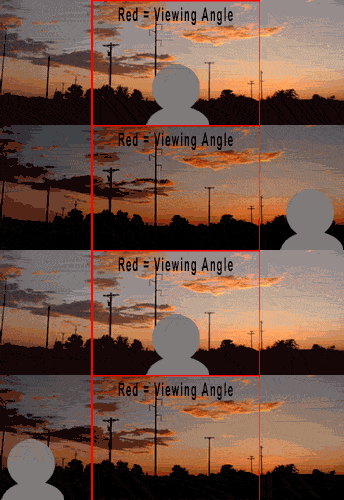
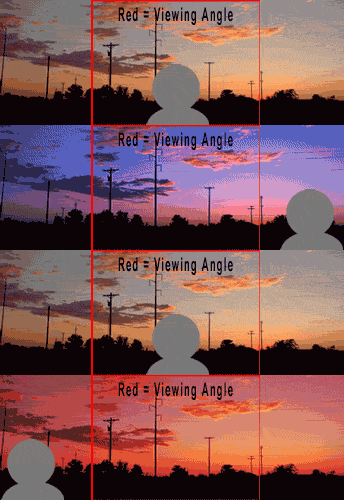
Cmq, credo che la cosa più importante in assoluto sia capire quale sarà il tuo angolo di visione medio, e la quantità di luce che potrebbe disturbare la tua visione (se stai visionando in un ambiente living). Se i posti a sedere sono ristretti all'interno dell'area dello schermo, e non si "allargano" potresti puntare pure per il blackout. Altrimenti, se i posti a sedere sono disposti a "ventaglio" forse ti converrà poco (altro link qui).
1° schema: meglio basso gain
2° schema: buono anche alto gain

kokkorollo
New member
- Messaggi
- 301
- Località
- Barletta (BA)
si, ma con un gain alto, e rimanendo di fronte allo schermo, quali sono i vantaggi?
cioè la mia proiezione di solito è come in figura 2 e la sala è completamente oscurabile.
ora vorrei capire se prendo un telo con gan 1.2 o con gain 1.5 quali saranno le differenze?
cioè cambiano colori e definizione, oppure solo la brillantezza dell'immagine.....
io userei 2 schermi uno per un Epson tw100 e l'altro per un DLP toshiba TDP s-20.......
Vorrei avere le idee chiare su cosa influisce direttamente il gain dellos chermo....
a questo punto credo solo nella lucentezza dell'immagine.......ma che si traduce in cosa?
cioè la mia proiezione di solito è come in figura 2 e la sala è completamente oscurabile.
ora vorrei capire se prendo un telo con gan 1.2 o con gain 1.5 quali saranno le differenze?
cioè cambiano colori e definizione, oppure solo la brillantezza dell'immagine.....
io userei 2 schermi uno per un Epson tw100 e l'altro per un DLP toshiba TDP s-20.......
Vorrei avere le idee chiare su cosa influisce direttamente il gain dellos chermo....
a questo punto credo solo nella lucentezza dell'immagine.......ma che si traduce in cosa?
Ti sei già dato la risposta.kokkorollo ha detto:a questo punto credo solo nella lucentezza dell'immagine.......ma che si traduce in cosa?
La differenza è solo la quantità di luce (luminosità) restituita. Naturalmente come già spiegato maggiore è la riflettenza (basata sul gain) minore sarà l'angolo di visione sfruttabile.
Gain 1.0 restituisce l'attuale luminosità vpr.
Gain 1.2 restituisce il 20% in più dell'attuale luminosità vpr.
Gain 1.5 restituisce il 50% in più dell'attuale luminosità vpr.
Gli LCD per cosa sono famosi? Per la luminosità! Allora la cosa migliore sarebbe abbatterla non accentuarla (a meno che non vuoi abbassare quella del vpr per risparmiarlo).
Purtroppo non è possibile dare un impressione scritta della differenza tra un telo 1.2 ed un telo 1.5. Bisognerebbe provarli entrambi e poi VALUTARE.
kokkorollo
New member
- Messaggi
- 301
- Località
- Barletta (BA)
a questo punto credo che farò una cosa di questo tipo.
ordino un telo con gain 1.2 per l'lcd, che cmq utilizzerò in modalità eco per risparmiare la lampada!
costruisco il telo e lo provo con entrambi i vpr,anche se il dlp proietta su 220 di base, mentre l'lcd proietterà su 150.....
quello che mi chiedo è se con un gain maggiore i neri perdono di intensità....
ordino un telo con gain 1.2 per l'lcd, che cmq utilizzerò in modalità eco per risparmiare la lampada!
costruisco il telo e lo provo con entrambi i vpr,anche se il dlp proietta su 220 di base, mentre l'lcd proietterà su 150.....
quello che mi chiedo è se con un gain maggiore i neri perdono di intensità....
E' quello che mi chiedo anch'io da ieri.kokkorollo ha detto:quello che mi chiedo è se con un gain maggiore i neri perdono di intensità....
In maniera del tutto inaspettata, ieri mi è arrivato il panny. Purtroppo mi sono preso tardi con il "telo ufficiale" e quindi sono senza. Tuttavia, grazie al vecchio hobby di mio padre, ho potuto testare la visione su di un telo per diapositive (colore grigio, altissima riflettenza, uno schifo). In quel momento ho pensato ai neri, che cosciente del fatto sarebbe stati "scarsi" con questa tecnologia, mi sembravano cmq smorti. L'alta riflettenza è stata la prima cosa che mi è venuta in mente... ora spero che le cose cambino con il nuovo arrivo (ma ci credo cmq poco).
kokkorollo
New member
- Messaggi
- 301
- Località
- Barletta (BA)
........................
tu da dove hai preso il telo?
come costruirai la cornice?
cmq ora vedo di ordinare il peroni con guadagno 1.2.......spero solo che l'immagine risulti brillante.
infatti non vorrei che l'immaigne sia opaca.......
il problema maggiore adesso è che io proiettavo sul ura in attesa di scegliere il vpr.
però adesso devo sbrigarmi, perchè abbiamo cambiato colore alle pareti........adesso proietto su un muro giallino......
ad essere sincero mi sembra che l'immagine proiettata non abbia la quantità di luce che ad esempio riscontro in tv lcd......
non voglio la stessa luminosità diretta, ma qualcosa che si avvicini si....
per questo vorrei scegliere bene il telo!
vorrei avere qualcuno da cui visionare i teli......
tu da dove hai preso il telo?
come costruirai la cornice?
cmq ora vedo di ordinare il peroni con guadagno 1.2.......spero solo che l'immagine risulti brillante.
infatti non vorrei che l'immaigne sia opaca.......
il problema maggiore adesso è che io proiettavo sul ura in attesa di scegliere il vpr.
però adesso devo sbrigarmi, perchè abbiamo cambiato colore alle pareti........adesso proietto su un muro giallino......
ad essere sincero mi sembra che l'immagine proiettata non abbia la quantità di luce che ad esempio riscontro in tv lcd......
non voglio la stessa luminosità diretta, ma qualcosa che si avvicini si....
per questo vorrei scegliere bene il telo!
vorrei avere qualcuno da cui visionare i teli......

eragon
Active member
- Messaggi
- 3,448
Ciao!kokkorollo ha detto:ad essere sincero mi sembra che l'immagine proiettata non abbia la quantità di luce che ad esempio riscontro in tv lcd......
non voglio la stessa luminosità diretta, ma qualcosa che si avvicini si....
Sono due cose diverse (tecnologie di visualizzazione) e due situazioni di utilizzo diverse (per l'illuminazione ambientale): ovviamente ci si deve abituare alla visione al buio praticamente completo, ma con un VPR lo spettacolo e' assicurato ugualmente, anzi...molto di piu'...
Saluti
Eragon
(aka Nemo propheta in patria)
schermionline punto itkokkorollo ha detto:tu da dove hai preso il telo?
Vuoi dire disegno o materiali?kokkorollo ha detto:come costruirai la cornice?
Ho tagliato dei listelli di credo 2.5cm di spessore (o 3?) larghi 5cm. Niente croce, ma solo il rinforzo verticale al centro più dei piccoli triangoli "pieni" agli angoli: 2mt di base (diagonale 90") per dare maggiore rigidità. La struttura, così, è molto leggera e non si flette.
Li compri tutti e due, l'1.2 e l'1.5kokkorollo ha detto:vorrei avere qualcuno da cui visionare i teli......
kokkorollo
New member
- Messaggi
- 301
- Località
- Barletta (BA)
eragon lo so che sono diversi, ma adesso l'immagine (anche complice il muro giallo ) mi sembra molto smorta.
per questo vorrei un telo che mi restituisca una buona brillantezza...
stealth82 quindi non hai fatto la croce, al centro, ma ci hai messo solo un listello verticale....
per curiosità (magari puoi dimelo in pvt che è meglio) quanto ti è venuto a costare il legno?
che materiale hai utilizzato?
vorrei prendere tutti e 2 i teli, ma poi dovrei prendere delle dimensioni di che mi faranno avanzare telo a sufficienza per cucire un vestito da sposa.
e poi gli €.......
) mi sembra molto smorta.per questo vorrei un telo che mi restituisca una buona brillantezza...
stealth82 quindi non hai fatto la croce, al centro, ma ci hai messo solo un listello verticale....
per curiosità (magari puoi dimelo in pvt che è meglio) quanto ti è venuto a costare il legno?
che materiale hai utilizzato?
vorrei prendere tutti e 2 i teli, ma poi dovrei prendere delle dimensioni di che mi faranno avanzare telo a sufficienza per cucire un vestito da sposa.
e poi gli €.......
kokkorollo
New member
- Messaggi
- 301
- Località
- Barletta (BA)
stealth82 quanto tempo va via per riceverlo dal sito che mi hai indicato?
i prezzi sono uguali a quelli di visualdr....
i prezzi sono uguali a quelli di visualdr....
eragon
Active member
- Messaggi
- 3,448
Perfetto, era solo per dirti che, se li metti uno di fianco all'altro (VPR e TV LCD), qualunque telo usi, le differenze di luminosita' e contrasto rimangono e sono molto evidenti...kokkorollo ha detto:eragon lo so che sono diversi, ma adesso l'immagine (anche complice il muro giallo) mi sembra molto smorta.
per questo vorrei un telo che mi restituisca una buona brillantezza...
Stai tranquillo che con un telo le cose sicuramente miglioreranno molto rispetto ad un muro giallo...
Saluti
Eragon
(aka Nemo propheta in patria)